
How to control diabetes naturally: 10 effective ways

Diabetes
To learn how to control diabetes naturally, we must first understand that Diabetes is one of the most common lifestyle-related health conditions in the world today. Millions of people live with diabetes, and many more are at risk due to unhealthy eating habits, lack of exercise, stress, and poor sleep. While diabetes is a long-term condition, fortunately, the good news is that it can be managed effectively with the right diet and daily routine.
In this regard, a diabetes diet does not mean giving up all your favourite foods or following extreme rules. It simply means eating healthy food in moderate amounts, choosing the right types of carbohydrates, and maintaining regular meal times. Notably, to control diabetes naturally, a balanced diet is rich in fruits, vegetables, whole grains, lean proteins, and healthy fats. Consequently, this way of eating helps control blood sugar levels, supports weight loss, and reduces the risk of heart disease and other complications.
In addition, a diabetes-friendly diet is one of the healthiest eating patterns for almost everyone, whether they have diabetes or not. Similarly, we present a natural way to control diabetes. Without doubt, integrating regular physical activity into your schedule, therefore, further enhances the body’s ability to regulate glucose levels. In contrast, neglecting hydration and stress management can worsen overall health outcomes. Moreover, maintaining adequate hydration and managing daily stress levels are indeed vital components of a holistic health strategy. As a result, small lifestyle changes can create lasting improvements in blood sugar control. In conclusion, always choose to control diabetes naturally, because every positive step moves you closer to a healthier life. Ultimately, these combined efforts make a significant difference.
what is Diabetes ?
Diabetes is a condition in which the body has trouble managing blood sugar (glucose) levels. Glucose is the main source of energy for the body and comes from the food we eat. Insulin, a hormone made by the pancreas, helps move glucose from the blood into the cells.
There are mainly two common types of diabetes:
- Type 1 diabetes: The body does not produce insulin.
Type 2 diabetes is the most common and is closely linked to lifestyle factors.
Causes of Diabetes
Diabetes develops due to a combination of genetic and lifestyle factors. While you cannot change your genes, you can control many lifestyle-related causes.
Common causes of diabetes include:
- Eating too much sugar and refined carbohydrates
- Frequent consumption of fast food and processed food
- Lack of physical activity
- Being overweight or obese
- Family history of diabetes
- High stress levels
- Poor sleep habits
- Hormonal imbalance and aging
Over time, these factors cause insulin resistance, meaning the body cannot use insulin properly. As a result, blood sugar levels rise.
Why Diet Is Important for Diabetes ?
Diet plays the most important role in managing diabetes. Every food you eat affects your blood sugar levels. When you eat too many calories or carbohydrates, blood sugar rises. If this happens regularly, it can lead to long-term complications.
Uncontrolled diabetes can cause:
- Heart disease
- Nerve damage
- Kidney problems
- Eye damage
- Poor wound healing
A healthy eating plan helps keep blood sugar levels stable and reduces the risk of these problems.
How to Control Diabetes Naturally
Diabetes management is not about quick fixes. It is about building healthy daily habits.
Easy ways to control diabetes naturally:
- Eat balanced meals at regular times
- Choose healthy carbohydrates
- Control portion sizes
- Stay physically active
- Maintain a healthy weight
- Get enough sleep
- Manage stress
- Monitor blood sugar regularly
Even small changes, when done consistently, can lead to big improvements in blood sugar control.
Diet Plan to control diabetes naturally:-
A diabetes diet focuses on balanced meals that include carbohydrates, protein, fat, and fiber in the right proportions. Eating at regular times helps the body use insulin more efficiently.
A registered dietitian can help personalize a diet plan based on:
- Age and body size
- Activity level
- Blood sugar goals
- Food preferences
- Cultural eating habits
Healthy Foods to control diabetes naturally
1. Healthy Carbohydrates
Carbohydrates have the biggest impact on blood sugar. During digestion, carbs turn into glucose. Choosing the right type of carbohydrates is essential.
Best carbohydrate choices:
- Whole fruits
- Vegetables
- Whole grains like brown rice, oats, quinoa
- Beans, lentils, peas
- Low-fat milk and yogurt
Avoid refined carbohydrates like white bread, white rice, and sugary foods.
2. Fiber-Rich Foods
Fiber slows digestion and helps prevent sudden spikes in blood sugar. It also supports digestion and heart health.
High-fiber foods include:
- Leafy green vegetables
- Whole fruits (not juice)
- Nuts and seeds
- Legumes
- Whole grains
Aim to include fiber in every meal.
3. Protein for Diabetes
Protein helps you feel full and does not raise blood sugar quickly.
Healthy protein sources:
- Fish such as salmon, tuna, sardines
- Skinless chicken or turkey
- Eggs (in moderation)
- Beans and lentils
- Tofu and paneer
4. Healthy Fats
Healthy fats improve cholesterol levels and support heart health.
Good fat sources:
- Olive oil
- Nuts and seeds
- Avocados
Use fats in small quantities since they are high in calories.
Foods to Avoid in Diabetes
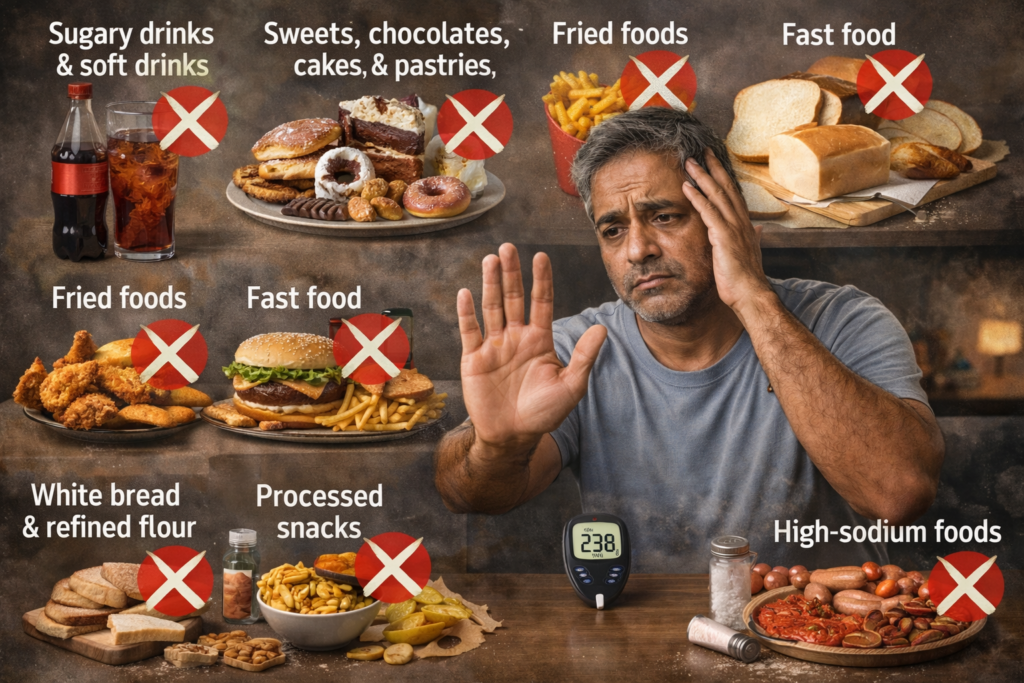
Certain foods raise blood sugar quickly and increase the risk of heart disease.
Limit or avoid:
- Sugary drinks and soft drinks
- Sweets, chocolates, cakes, and pastries
- Fried foods
- Fast food
- White bread and refined flour
- Processed snacks
- High-sodium foods
Daily Routine: What to Eat and When
Breakfast
A healthy breakfast helps control blood sugar throughout the day.
- Whole-grain toast or oats
- One boiled egg or yogurt
- One fruit
- Unsweetened tea or coffee
Mid-Morning Snack
- Handful of nuts
- One fruit
Lunch
- Brown rice or whole-wheat roti
- Grilled chicken, fish, or lentils
- Plenty of vegetables
- Salad
Evening Snack
- Roasted chickpeas
- Air-popped popcorn
Dinner
- Light meal with protein and vegetables
- Small portion of whole grains
Creating a Balanced Plate to control diabetes naturally
Managing diabetes doesn’t always mean measuring every single bite. In fact, one of the simplest and most practical ways to eat right is by using the “balanced plate” method.
Basically, think of your plate like this:
Half of it should be filled with vegetables — things like spinach, cucumber, beans, carrots, or cauliflower. Because of this, you get low in calories but rich in nutrients and fibre.
Meanwhile, one-quarter of your plate should include protein. This could be anything from dal, paneer, tofu, eggs, or grilled chicken.
Subsequently, the remaining part of your plate can be whole grains like brown rice, oats, or roti made from whole wheat.
As a result, once you start following this pattern, you won’t have to overthink your meals. Furthermore, it becomes a habit, and over time, your body will thank you for it. Altogether, this simple method makes healthy eating feel effortless and sustainable
Portion Control: The Real Game Changer
A lot of people think switching to healthy food is enough. But here’s the truth—portion size matters just as much.
Even healthy food can raise your sugar levels if you eat too much of it. So instead of completely restricting yourself, focus on eating the right amount.
A few simple habits can help:
Eat slowly and chew properly. This gives your brain time to realize you’re full.
Use smaller plates—it actually works!
Avoid eating directly from packets, especially snacks.
Over time, you’ll naturally start eating less without feeling deprived.
Understanding Glycemic Index (GI) in Simple Terms
You might have heard about the Glycemic Index, but let’s make it easy.
Some foods release sugar into your blood very quickly—these are high-GI foods. Others release it slowly—these are low-GI foods.
Therefore, it’s better to choose foods that keep your sugar levels stable.
For example, oats, dal, vegetables, and whole grains are better choices because they keep your sugar stable. On the other hand, white bread, sweets, and processed foods can cause sudden highs and lows.
You don’t have to memorize numbers—just stick to natural, less processed foods, and you’ll be on the right track.
Why Drinking Water Matters More Than You Think
People often ignore hydration, but it plays a big role in managing diabetes.
When you drink enough water, your body can flush out excess sugar more efficiently. It also helps you feel full, which prevents unnecessary snacking.
Try to:
Drink water throughout the day, not just when you feel thirsty
Replace sugary drinks with plain water or herbal teas
Add lemon or mint if you want a little flavor
It’s a small habit, but it makes a big difference.
Meal Timing: Small Habit, Big Impact
It’s not just what you eat—it’s also when you eat.
Irregular eating patterns can confuse your body and make blood sugar harder to control. Skipping meals is especially harmful.
Try to follow a simple routine: to control diabetes naturally
Start your day with a proper breakfast
Eat something light every 3–4 hours
Keep dinner early and light
Once your body gets used to a routine, managing sugar levels becomes much easier.
Smart Snacking Without Guilt
Snacking isn’t the enemy. In fact, smart snacking can actually help you avoid overeating later. The key is choosing the right snacks. Instead of chips or biscuits, go for options like roasted chana, a handful of nuts, boiled chickpeas, or even plain yoghurt.
These keep you full for longer and don’t cause sudden sugar spikes.
So yes, you can snack—just snack wisely.
Simple Do’s and Don’ts You Can Actually Follow
Let’s keep it real and practical.
What you should do:
Try to eat home-cooked meals as much as possible
Include vegetables in almost every meal
Stay active—even a daily walk helps
Keep track of your sugar levels
What to avoid:
Skipping meals thinking it will help
Eating too many sweets “just once” (it adds up)
Relying on packaged or fast food regularly
Ignoring your body’s warning signs
These aren’t strict rules—they’re just small habits that make life easier.
Why Exercise Is Just as Important as Diet
If you want to control diabetes naturally, diet is one pillar, exercise is the other. You don’t need a gym or fancy workouts. Even simple activities can help your body use insulin better.
Start with something easy:
A 30-minute walk daily
Light yoga or stretching
Cycling or even household work
The idea is to keep moving. The more active you are, the better your body manages sugar. Managing Stress (Yes, It Affects Sugar Too)Stress doesn’t just affect your mind—it directly impacts your blood sugar. When you’re stressed, your body releases hormones that can increase sugar levels. So, taking care of your mental health is just as important.
Try simple things like:
Deep breathing for a few minutes
Listening to music you enjoy
Spending time with family or friends
Taking short breaks during the day
You don’t need anything complicated. Just slow down a little.
Sleep: The Most Underrated Factor. Many people ignore sleep, but it plays a huge role in diabetes control. Poor sleep can increase insulin resistance and make your sugar levels harder to manage.
A few easy fixes:
Go to bed at the same time every day Avoid using your phone before sleepKeep your dinner lightAim for 7–8 hours of sleep. It’s one of the simplest ways to improve your health.
Remedies to control diabetes naturally
Some traditional remedies can support your efforts, but they are not magic solutions. Things like soaked methi seeds, a little cinnamon, karela juice, or amla are often used in Indian households. They may help, but they should never replace your main diet or medications. Always be careful and consult a doctor if you’re unsure. This is important because relying only on home remedies can delay proper treatment. At the same time, using them wisely along with a healthy lifestyle can offer additional benefits.
Tracking Your Progress to control diabetes naturally
Managing diabetes is not a one-time effort—it’s a continuous process.
So, it helps to keep an eye on your progress.
You can track:
Your blood sugar levels, weight, eating habits, and daily activity
This way, you’ll understand what works for your body and what doesn’t.
What Happens When You Stay Consistent
When you follow a healthy routine regularly, the results start showing.
You’ll feel more energetic
Your weight becomes easier to manage, sugar levels stay more stable, and the risk of complications reduces
It’s not about perfection—it’s about consistency. This is powerful because long-term consistency builds lasting health benefits. In addition, it reduces the risk of serious complications in the future.
Final Thoughts
At the end of the day, managing diabetes isn’t about strict diets or giving up everything you love.It’s about making smarter choices, one step at a time.Start small. Maybe switch to whole grains, take a short walk daily, or fix your meal timings.This journey takes time, but every small step counts. In the long run, these habits become a natural part of your lifestyle and help you live a healthier, happier life.




Post Comment