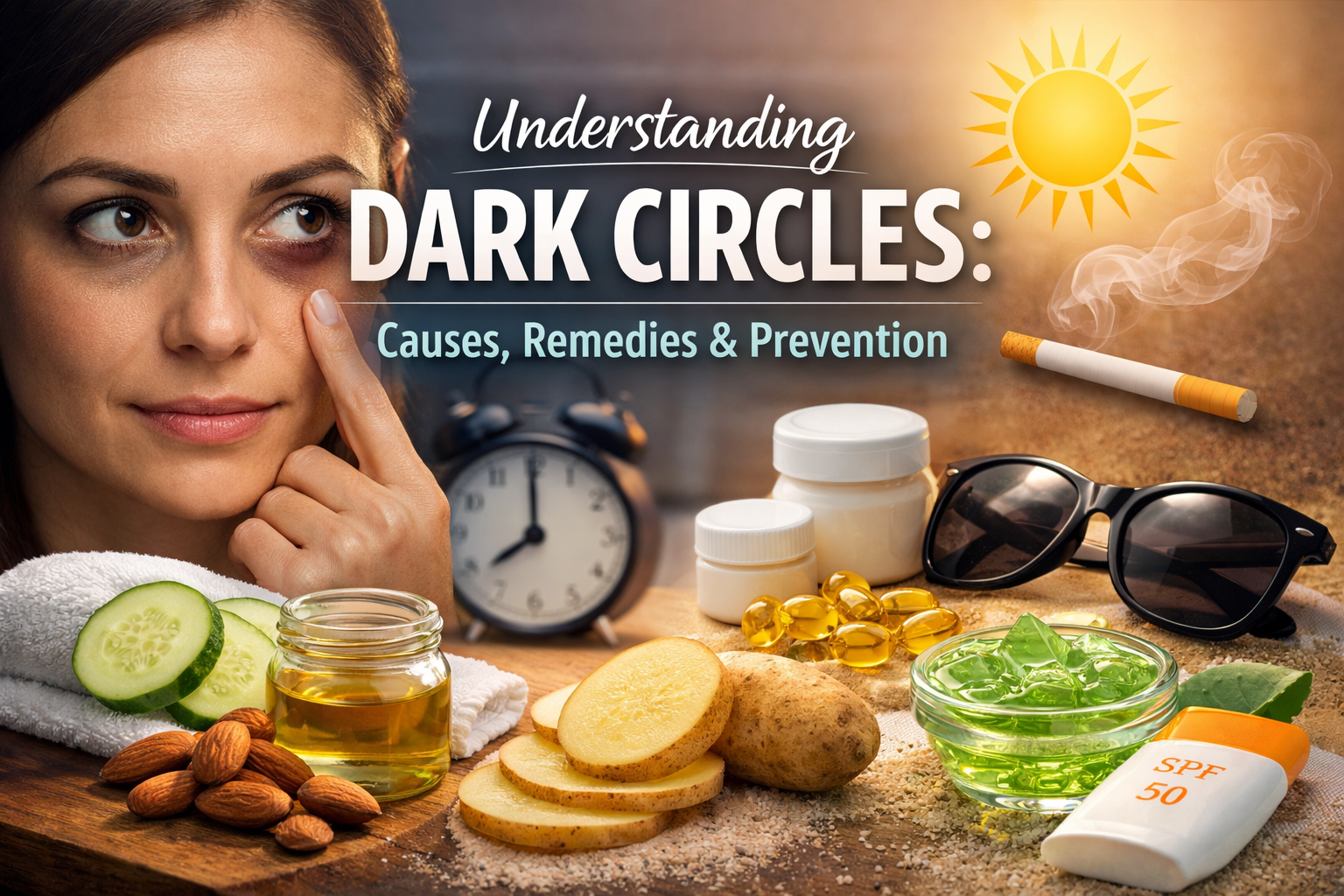
How to reduce dark circles under eye: 7 effective tips
The Under-Eye Problem Nobody Talks About Honestly

Most people blame a single bad night. They wake up, look in the mirror, and see dark circles. Then, they reach for a concealer and move on. However, the real cause is often being ignored by them. As a registered dietitian, I work with clients every day. Many of them treat dark circles as just a beauty problem. But that thinking is wrong. Dark circles are actually a warning sign. They tell you that your body needs something — sleep, water, food, or rest. So, understanding the real triggers matters more than any cream or serum. The skin under your eyes is very thin. It is less than one millimeter deep. Therefore, any problem inside your body shows up there first. Before you spend money on expensive treatments, stop and think. Ask yourself one simple question: what is your body trying to tell you?
Your Lifestyle Is Writing Itself Across Your Face
- Your under-eye area works like a mirror. It reflects what is happening inside your body every single day.
- Poor sleep is one of the biggest causes. Sleeping less than seven to eight hours slows blood circulation. As a result, blood gets stuck in tiny vessels under your eyes, making the skin look dark and bluish.
- Dehydration makes things worse. Drinking less than eight to ten glasses of water daily causes the under-eye skin to look hollow and dark.
- Stress is also a hidden trigger. High cortisol levels push blood flow away from your face. Consequently, the under-eye area looks dull, pale, and tired.
The Role of Nutrition in Under-Eye Discoloration
- Low iron means less oxygen reaches your skin cells. Low Vitamin C means your body cannot produce enough collagen. Without collagen, skin gets thinner and blood vessels become more visible.
- A diet low in antioxidants speeds up skin ageing. Therefore, eating foods like blueberries, cherries, and red cabbage strengthens blood vessels and reduces visible darkening.
- Alcohol and smoking shrink blood vessels. As a result, less oxygen reaches the under-eye skin, causing it to darken and lose elasticity over time.
What Happens to Skin as You Age — And Why It Matters Here
- After your mid-twenties, collagen production drops steadily. Additionally, skin keeps getting thinner every year, making dark blood vessels easier to see.
- Fat pads under the eyes shift downward with age. This creates shadows that closely resemble dark circles and makes the problem look worse.
- UV rays trigger excess melanin production. Over time, this pigment builds up under the eyes. Therefore, daily SPF is not just skincare — it is a science-backed protective habit.
Seven Evidence-Informed Home Approaches Worth Trying
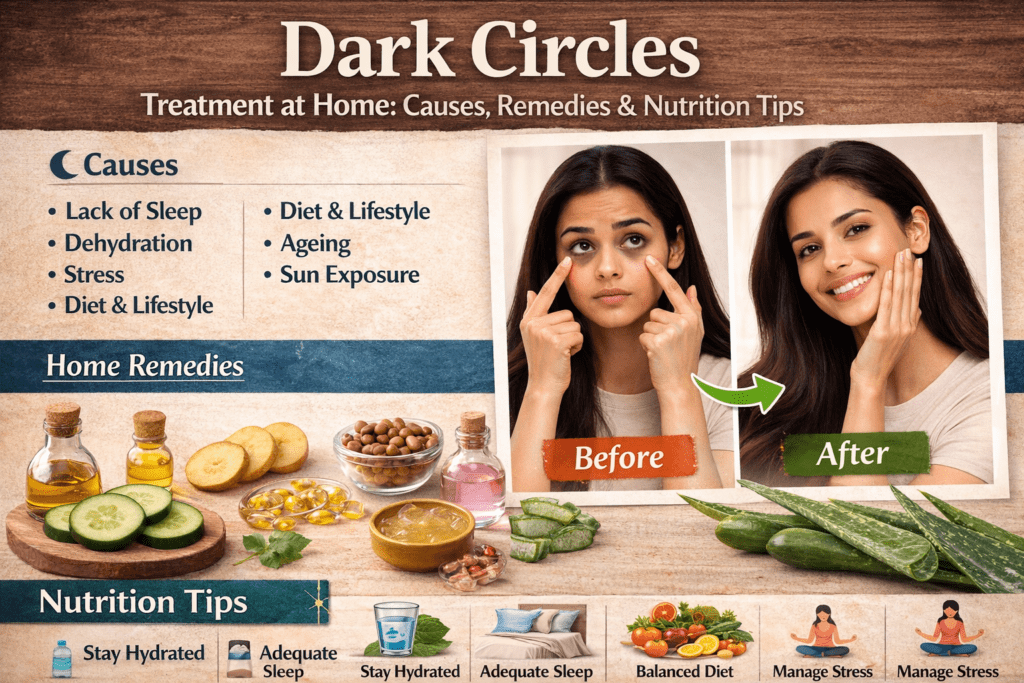
- Cold cucumber slices — Place chilled slices over closed eyes for ten to fifteen minutes. They tighten blood vessels and reduce puffiness quickly, especially after poor sleep.
- Almond oil — Massage a small amount under your eyes each night. Its Vitamin E and anti-inflammatory compounds improve circulation and keep skin moisturized.
- Raw potato slices — Rub thin slices under your eyes for five to ten minutes. The enzyme catecholase lightens skin, while potato starch reduces inflammation.
- Vitamin E capsule blends — Mix capsule gel with a light carrier oil and apply before bed. This strengthens the skin barrier and locks in moisture overnight.
- Rose water cotton pads — Dip a cotton pad in rose water and place it under your eyes. It soothes the skin, evens tone, and causes zero irritation.
- Aloe vera gel — Apply under your eyes every night before sleeping. Its compound aloesin shows early promise in reducing pigmentation at a cellular level.
- Daily SPF — Apply sunscreen around the orbital bone every morning. This is the single most evidence-backed step to prevent UV-driven under-eye darkening.
Building a Consistent Daily Routine That Actually Works to Reduce Dark Circles
- No single remedy works alone. Results come from stacking good habits consistently every day.
- Sleep seven to nine hours nightly. During deep sleep, your skin actively repairs itself. Also, use an extra pillow to stop fluid from settling under your eyes.
- Space your water intake evenly through the day. This keeps skin plump and prevents a hollow, sunken look.
- Eat leafy greens, Omega-3 fats, and Vitamin C-rich foods daily. Together, these build the right internal foundation for healthy skin.
When Home Care Is Not Enough — A Clinical Perspective
- Sometimes, lifestyle changes are not enough. Genetics, facial structure, and chronic allergies can cause dark circles that persist no matter what you do.
- In such cases, consult a dermatologist. Options like retinoid creams, chemical peels, or under-eye fillers are safe when done by a qualified professional.
- Never ignore dark circles under only one eye. This could signal a vascular, lymphatic, or sinus issue. Therefore, see a doctor promptly if this happens — do not rely on home remedies alone.
The Dietitian’s Bottom Line
- Dark circles are a body signal, not just a beauty flaw. They appear when something is off — poor sleep, bad diet, low hydration, or chronic stress.
- The real fix starts from within. Focus on sleep, nutrition, water, and stress management first.
- Add consistent home care alongside these habits. Over time, your under-eye skin will visibly respond.



Post Comment