How to Reduce Hair Fall Naturally: 10 Effective Tips

Are you worried about hair fall? If so, you are certainly not alone. In fact, millions of people worldwide struggle with hair loss caused by lifestyle habits, chronic stress, nutritional gaps, and poor scalp care. Fortunately, the right combination of targeted remedies and consistent daily habits can make a significant difference. In this guide, you will discover the most effective natural ways to reduce hair fall, strengthen your strands, and restore scalp health — all backed by expert nutritional advice.
Why Does Hair Fall Happen?
Hair fall can occur due to several interconnected reasons. Understanding the root cause is, therefore, the most important first step toward effective treatment.
1. Nutritional Deficiencies
Low levels of iron, protein, vitamin D, B12, and zinc are among the most common — yet frequently overlooked — causes of hair shedding. Specifically, these nutrients weaken hair strands at the follicle level, leading to premature breakage and visible thinning over time. They help you to reduce hair fall.
2. Hormonal Changes
Hormonal fluctuations triggered by pregnancy, menopause, thyroid imbalances, and PCOS often disrupt the natural hair growth cycle. As a result, many people experience sudden or gradual hair loss during these life stages without understanding the underlying hormonal connection.
3. Stress and Anxiety
Chronic stress elevates cortisol levels in the body, which consequently push hair follicles into an extended resting phase. This biological response leads to noticeable shedding, often appearing weeks after the stressful period itself has passed.
4. Scalp Infections
Conditions such as dandruff, psoriasis, and fungal infections directly damage hair roots by creating chronic scalp inflammation. Moreover, an unhealthy scalp environment weakens the follicle’s grip on each strand, accelerating the rate of fall.
5. Hair Care Mistakes
Excessive heat styling, frequent chemical treatments, and consistently tight hairstyles each place significant mechanical and thermal stress on hair strands. Over time, these repeated habits weaken the hair shaft and contribute to breakage that is often mistaken for natural shedding.
6. Medical Conditions
Chronic illnesses and autoimmune disorders, including alopecia areata, can trigger heavy, rapid hair fall that is difficult to control with lifestyle changes alone. In such cases, therefore, a medical consultation is essential before attempting any natural treatment protocol.
Signs of Excessive Hair Fall
It is normal to shed between 50 and 100 strands daily. However, the following signs may indicate that your hair fall has crossed into a clinically significant range worth addressing:
- Losing noticeably more than 100 strands per day
- Visible thinning at the parting line or small bald patches developing
- A progressively receding hairline, which is particularly common in men
- Hair that snaps easily, feels significantly finer, or looks dull and brittle
How to Reduce Hair Fall Naturally
Fortunately, there are several evidence-informed, natural strategies that can meaningfully slow hair fall and support healthy regrowth. The most effective approach combines internal nutrition with consistent external scalp care.
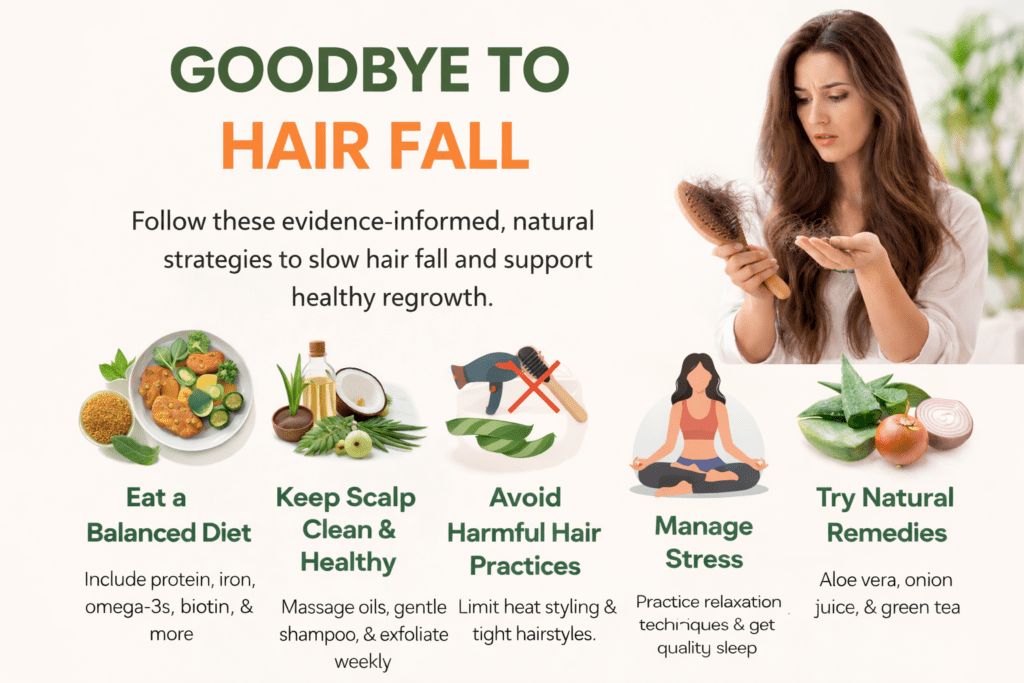
1. Eat a balanced diet to reduce hair fall
Nutrition is, without question, the single most powerful lever for reducing hair fall from the inside out. Since hair is composed almost entirely of keratin — a structural protein — adequate daily protein intake is the non-negotiable foundation of any hair restoration plan.
Key nutrients to include daily:
- Protein: eggs, chicken, lentils, fish
- Iron: spinach, kidney beans, red meat
- Omega-3 fatty acids: walnuts, flaxseeds, fatty fish
- Vitamin C: citrus fruits, bell peppers
- Biotin: eggs, almonds, sweet potatoes
Together, these nutrients strengthen the hair shaft, stimulate follicle activity, and protect against premature thinning caused by micronutrient deficiency.
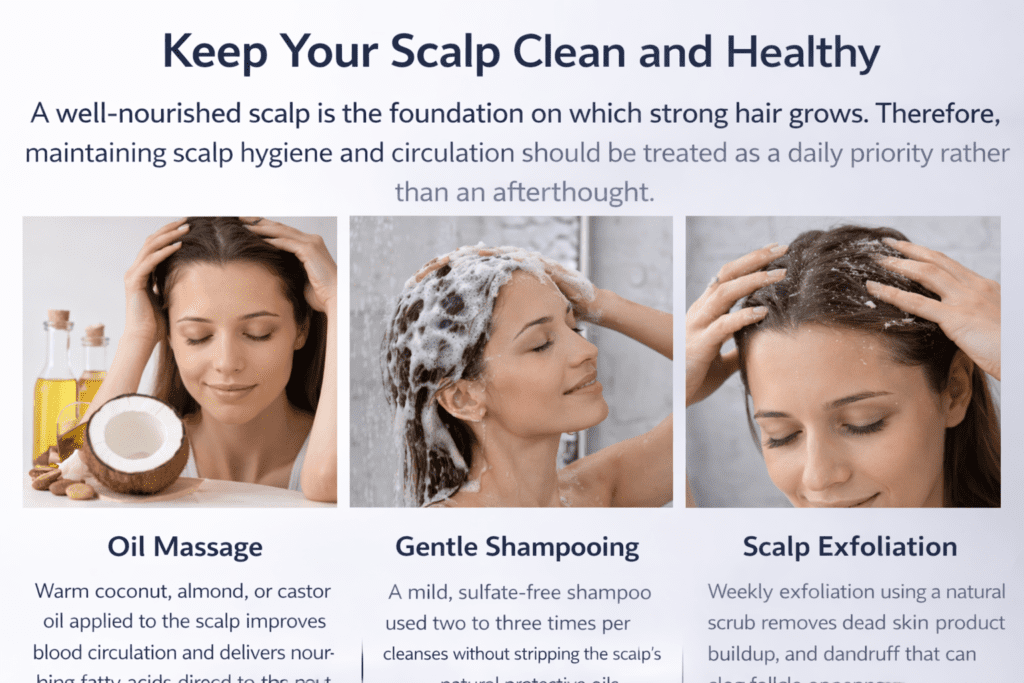
2. Keep Your Scalp Clean and Healthy to reduce hair fall
A well-nourished scalp is the foundation on which strong hair grows. Therefore, maintaining scalp hygiene and circulation should be treated as a daily priority rather than an afterthought.
- Oil Massage: Warm coconut, almond, or castor oil applied to the scalp improves blood circulation and delivers nourishing fatty acids directly to the hair roots
- Gentle Shampooing: A mild, sulfate-free shampoo used two to three times per weekcleanses without stripping the scalp’s natural protective oils
- Scalp Exfoliation: Weekly exfoliation using a natural scrub removes dead skin, product buildup, and dandruff that can clog follicle openings over time
3. Avoid Harmful Hair Practices to reduce hair fall
Even when nutrition is optimised, damaging daily hair habits can silently undermine your progress. Specifically, the following changes will reduce both mechanical breakage and long-term follicle stress:
- Limit heat styling tools — blow dryers, curlers, and straighteners — to no more than three sessions per week
- Avoid chronically tight ponytails, buns, or braids that create sustained tension at the follicle root
- Always detangle wet hair using a wide-tooth comb, working gently from ends toward the roots
4. Manage Stress Consistently to reduce hair fall
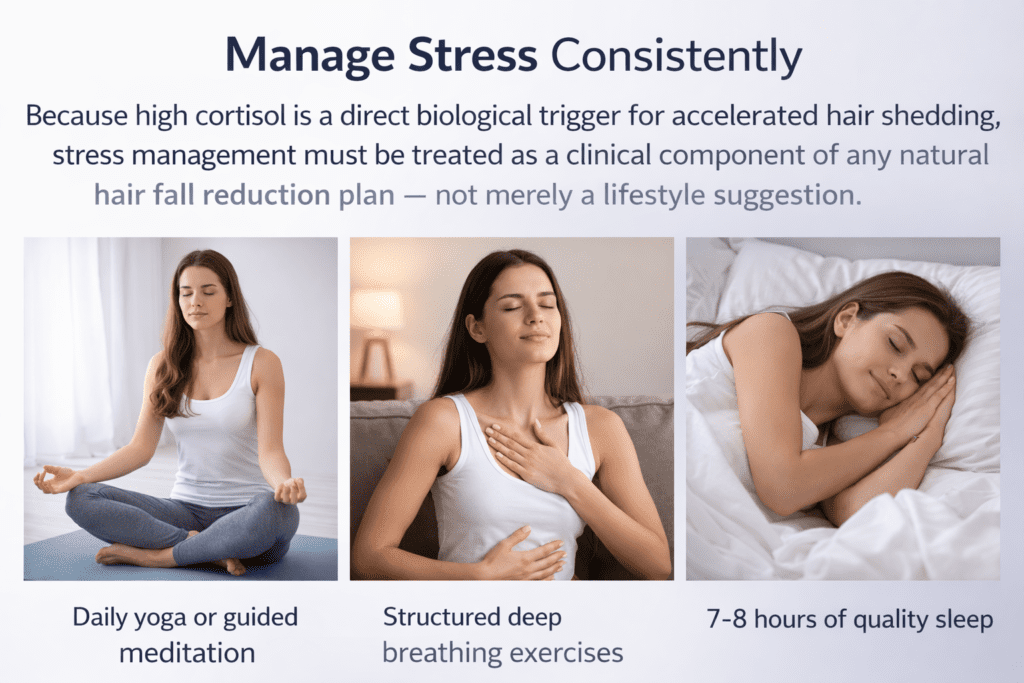
Because high cortisol is a direct biological trigger for accelerated hair shedding, stress management must be treated as a clinical component of any natural to reduce hair fall plan — not merely a lifestyle suggestion.
- Daily yoga or guided meditation to regulate the stress response at a neurological level
- Structured deep breathing exercises to activate the parasympathetic nervous system
- Seven to eight hours of uninterrupted, quality sleep every night to support overnight follicle repair
5. Try Proven Natural Home Remedies to reduce hair fall
Several plant-derived remedies have accumulated meaningful support in the scientific literature as complementary tools for reducing hair fall and encouraging regrowth. When used consistently alongside good nutrition and scalp care, they can deliver visible improvements within four to eight weeks:
- Aloe Vera: Its primary role is to reduce hair fall, proteolytic enzymes reduce scalp inflammation and soothe irritation that can weaken follicle attachment
- Onion Juice: Rich in dietary sulfur, it supports keratin cross-linking and has shown measurable regrowth benefits in small clinical studies. It has been found to be good to reduce hair fall
- Green Tea Rinse: High in EGCG antioxidants, it strengthens hair follicles and inhibits the hormone linked to follicle miniaturisation
When to See a Doctor
While natural strategies are highly effective for most forms of hair fall, certain patterns indicate that professional medical evaluation is the appropriate next step. Specifically, consult a dermatologist if you experience any of the following:
- Sudden or unusually rapid hair loss developing over a short period
- Persistent thinning that shows no improvement despite consistent home remedies
- Clearly visible bald patches forming on the scalp
In such cases, your doctor may recommend:
- Blood tests to check thyroid function, ferritin, vitamin D, and B12 levels
- Clinically approved treatments such as minoxidil or PRP therapy for accelerated regrowth
- Immunotherapy or corticosteroid treatment if an autoimmune cause is identified
Conclusion
Reducing hair fall naturally is absolutely achievable — provided the approach is comprehensive and consistent. Furthermore, a well-structured combination of targeted nutrition, regular scalp care, healthier daily habits, and evidence-backed home remedies can meaningfully strengthen your hair and slow shedding over time. However, if hair fall is sudden, severe, or persistent, consulting a dermatologist early ensures accurate diagnosis and timely, effective treatment. Therefore, by staying consistent and additionally addressing both the internal and external factors driving hair loss, you can consequently restore stronger, shinier, and healthier hair — naturally. Ultimately, the results you want are well within reach.


Post Comment